Where the garment meets reality
A sample is a question made of cloth.
Prototype, fit, size-set, and pre-production samples answer different questions on the road to a repeatable garment.
Sampling is a sequence of tests, each one removing a different kind of doubt.
The first sewn version doesn’t have to be beautiful to be useful. It might exist to test proportion, pattern logic, how the thing goes together, or whether the idea survives gravity. Calling every physical version “the sample” hides what the team is actually trying to learn.
Names vary between companies and factories, but the useful distinction is purpose. A prototype asks whether the concept and construction work at all. A fit sample tests shape and measurements on a specific body or form. A size set checks the grading. A pre-production sample shows the approved materials and methods before bulk sewing starts.
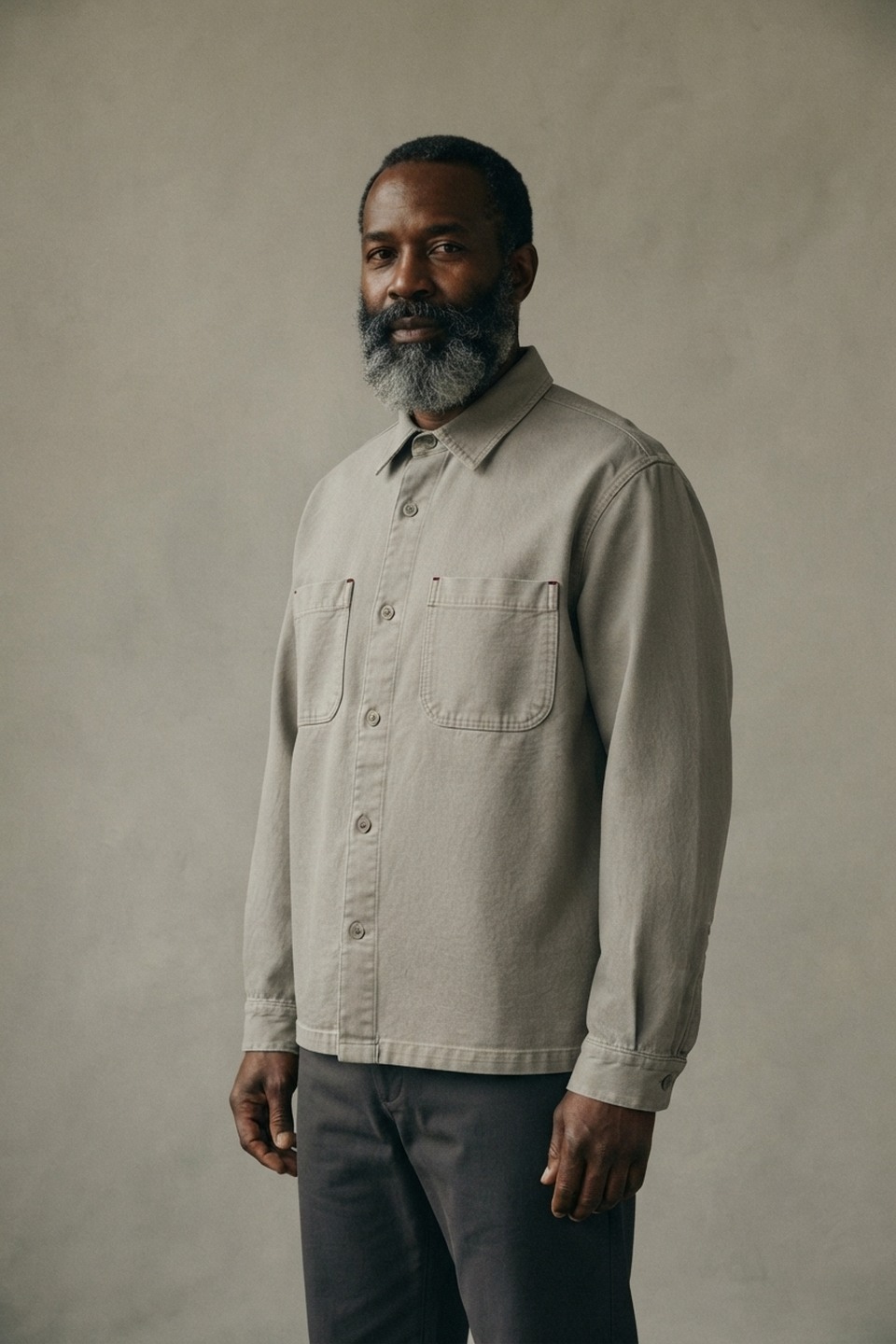 AI concept render
Can this idea become a garment?
Does the pattern behave on the target form?
Does the shape survive grading?
Can approved inputs be repeated in bulk?
A cheap prototype still has to answer the right question.
A first pattern is often tested in cheap substitute cloth to check proportion, seam placement, and assembly. In draped work that’s a toile or a muslin. The stand-in has to match the real material in the property you’re testing, though. Crisp cotton can’t tell you how bias-cut satin will fall.
Write the question on the sample record: does the collar shape work, is there enough reach, can the pocket be assembled? A rough sample succeeds when it answers that cheaply. Don’t judge it as a failed finished garment, and don’t let polish hide structure that isn’t resolved.
A fit session reads causes from wrinkles.
Fit starts with balance: does the garment hang level, and do its landmarks sit where they should? Horizontal strain lines usually mean not enough width. Diagonal lines usually point at a spot that needs length or release. Wrinkles are clues, though. Posture, fabric, and how the garment was put on all get a say.
Measure the sample before the fitting so a sewing variance isn’t mistaken for a pattern problem. Photograph front, side, and back, then in motion. Pin or slash on purpose and note the amount. “Looks weird near the arm” can’t guide a patternmaker. “Add 15 mm of back width across the shoulder, forward reach is restricted” can.
One correction can move another problem.
Garments are connected. Lower an armhole and you add room but lose lift. Shorten a body and you crowd a pocket. Change the fabric and stretch, seam bulk, shrinkage, and hang all change with it. So sampling goes in rounds, instead of treating each comment as a separate edit.
The updated tech pack and the sample history travel together. If the garment changed but the record didn’t, the next sample can repeat a mistake you already solved.
Each specialist sees a different cause.
The designer sees intent, the patternmaker sees geometry, the sample machinist sees assembly, and the fabric specialist sees behavior. Good development gives each of them room to say what’s causing a problem. A designer asks for a narrower neckline; the patternmaker points out the head will no longer fit through. The answer might be stretch, an opening, or a smaller ambition.
Be decisive about the outcome and open about the repair. Teams that only trade marked-up photos lose the reasoning that would have prevented the next issue.
Materials and decoration deserve their own samples.
A lab dip tests color. A strike-off tests a print. An embroidery sew-out tests thread, density, and backing. A wash test asks how the assembled materials change together. Small samples catch interactions early: a print stiffens a soft panel, dye migrates into a pale decoration.
Approve the exact sample under stated conditions. A phone photo can’t approve color. A lovely sew-out on felt proves nothing about lightweight jersey. Keep the physical reference, label it, and tie it to the current tech pack version.
A size set tests the logic between sizes.
Once the base pattern is approved, a few sizes are sampled to check the grading. Every measurement will have moved by its grade rule. The point is to see whether fit, proportion, pocket access, and artwork placement still make sense at the ends of the range. Grading can be numerically tidy while the smallest or largest garment loses the design.
Fit these samples on real bodies when you can; a form built from one idealized shape hides a lot. The fix may be a revised grade or a split pattern piece. Better to learn that on four samples than on four thousand units.
Approval needs a named purpose.
A fit approval doesn’t approve color, print, wash, labels, packaging, or bulk workmanship. A salesman sample might prioritize looks for a showroom. A pre-production sample should show the real production inputs and construction. Say what each sign-off covers.
Keep the approved reference, revision, measurements, comments, and date together. “Looks good” in a message isn’t production evidence. Approval is a controlled comparison between one specific object and one specific standard.
Pre-production approval freezes the inputs.
A pre-production sample should match the approved fabric, trims, color, construction, and measurements closely enough to sign off the production method. Open issues get resolved in writing. A top-of-production sample can then confirm what the line actually made once it was running for real.
This only works if changes have a memory. Number every sample, date every comment set, and carry decisions into the pack. Say exactly what is approved and what deviations are allowed. Surprises will still happen. The goal is for them to be new ones.
Approval never means every future unit will be identical.
Fabric rolls vary, people and machines sew, and measurements live inside tolerances. Bulk production aims for controlled variation around an approved standard, which is why the pack, the sealed sample, and the agreed tolerances work together. One perfect prototype without reproducible instructions is a sculpture.
Decide which features are critical to function, fit, safety, or the look, and inspect those hardest. A millimeter that changes how a zipper runs matters more than a millimeter inside a generous hem. Sampling sets the standard. Quality control watches it travel.
The goal is fewer repeated questions.
A good sample round has a purpose, a test, a record, and a decision. The next version should know what the last one learned.