Turning intention into instruction
A tech pack removes expensive guesses.
A factory can’t sew a mood board. It needs measurements, materials, construction details, and a record of what changed.
A tech pack is the one document everyone builds from as a garment moves from sketch to samples to production.
A sketch shows proportion and attitude. It doesn’t say which stitch, which fabric, how long the zipper is, or how much the measurements are allowed to vary. Someone still decides all of that. Leave it out and the deciding moves downstream to a patternmaker or a factory, guessing.
A tech pack collects everything needed to build and rebuild the garment: technical flats, a measurement table, construction details, materials and trims, artwork, colorways, labels, and revision notes. What exactly goes in depends on the product and how it’s being made.
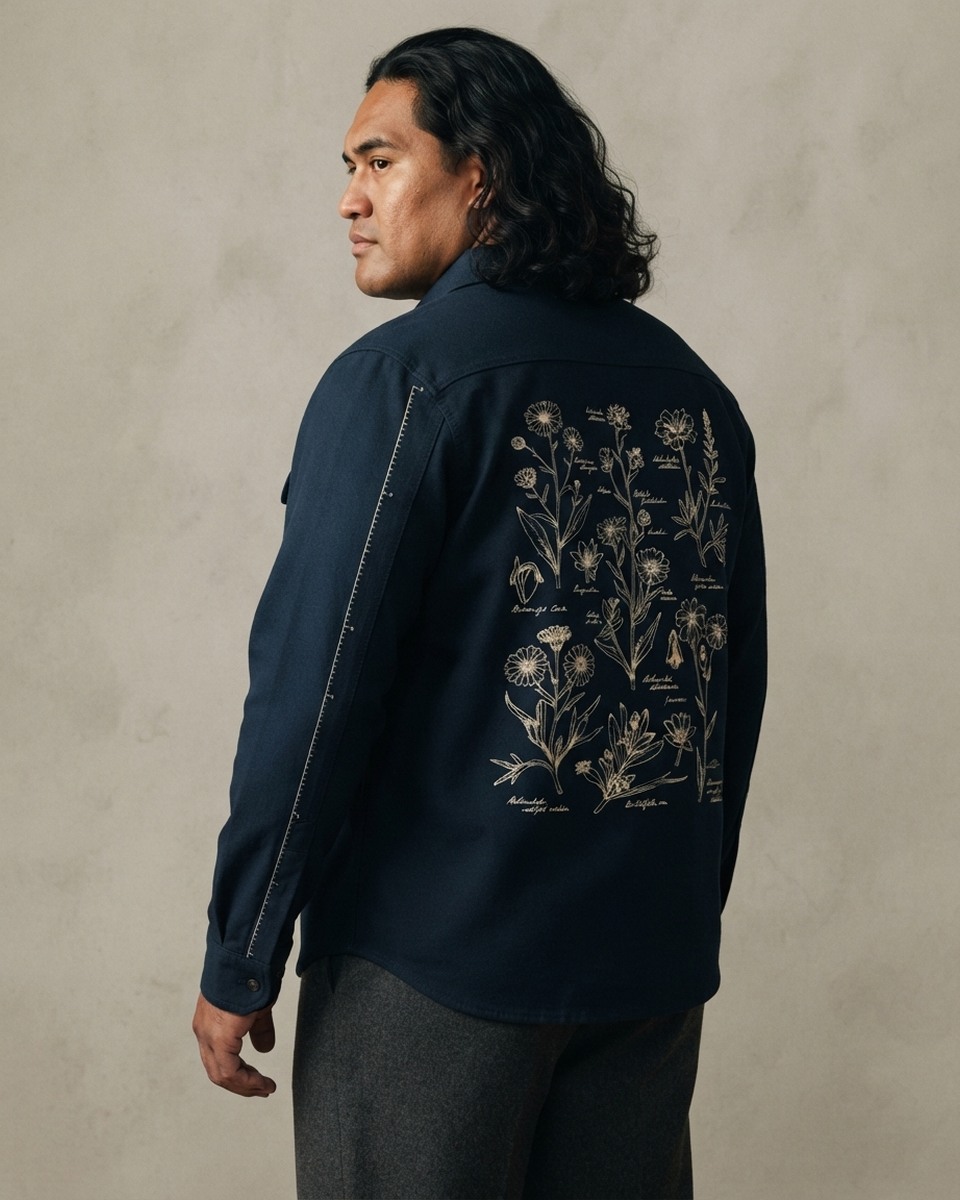 AI concept render
Style number, revision, colorway, owner
Front, back, and detail drawings
Fabric, trim, thread, labels, packaging
Seams, stitches, finishes, placements
Points of measure, sizes, tolerances
Comments, sample changes, approvals
Start with the questions a drawing cannot answer.
A flat shows every panel, seam, opening, and component with no perspective and no styling in the way. Detail pages zoom into unusual construction. Callouts point at exact spots. A bill of materials names every physical ingredient and where it goes.
Measurements need named points and a repeatable method. “Body length” means nothing until you say where it starts, where it ends, and what path it follows. Tolerances admit that sewn things vary, and say how much variation you’ll accept.
Give the style a number and a version.
A tech pack starts with a style number, a name, a season, a sample size, and an owner. That sounds clerical until two black overshirts with similar names are in development at once. The style number ties the drawing, pattern, bill of materials, sample comments, and purchase order together. Names can change for marketing. The number can’t.
Put a version and a revision date on every issue, and mark what changed. Retire old exports so nobody builds from yesterday’s measurement table. All of this exists to answer one expensive question: which instructions were current when this sample was made?
Flats show seams, not attitude.
A fashion illustration shows posture and proportion. A technical flat shows seams. Draw the front and back as if the garment were laid flat on a table, then add detail views wherever construction hides. If the garment is asymmetric, don’t let a mirrored drawing erase that.
Use callouts for anything a line can’t carry: seam type, stitch count, edge finish, reinforcement, hardware size. Each arrow should land on one specific feature. “Nice clean finish” gives the sample room nothing to check. “Turn back 20 mm and twin-needle at 15 mm” does.
The bill of materials names every part.
The bill of materials, the BOM, lists everything needed to build the style, from body cloth down to thread, labels, and the bag it ships in. Each line gets a description, a supplier code, a color, a placement, and a consumption once you know it. A photo helps. It doesn’t replace a code.
Color needs unusual precision here. “Navy” covers a lot of ground. Reference a standard, a lab dip, or an approved swatch, and say which components must match. Different fibers take dye differently, so a zipper tape and a cotton body may need a planned contrast rather than an impossible match.
Measurements need landmarks, tolerances, and a sample size.
A point of measure only works if two people can find it the same way. “Body length” might start at the high point shoulder or at center back neck. Include a diagram, the method, the target, and a tolerance, and say whether the garment is relaxed, stretched, or laid flat.
The base size table describes one sample. Grading rules describe how the style changes across the range. Don’t assume the factory will infer the increments, and check the relationships as well as the numbers: pocket access, artwork scale, and neckline shape rarely scale by a repeated plus sign.
Construction has an order.
A construction page names seam and stitch types, allowances, thread, reinforcement, pressing, and the order of operations. Order matters because later steps block access to earlier edges. The pocket may have to be finished before the side seam closes. A label may need to be caught in the neckline seam.
Don’t prescribe factory methods just to sound technical. Name the outcome and any construction that can’t change, then let a qualified maker propose the efficient way to get there.
The pack keeps changing after the first sample.
The first sample exposes your assumptions. A seam needs a different finish, a pocket moves, a fabric grows in the wash. Record the fix in the pack, bump the revision, and tie the note to the sample it came from.
Freeze the pack at handoff and you end up with two garments: the one in the document and the one being argued over in messages. The approved record should absorb every resolved change, so the next person doesn’t have to reconstruct history from a chat thread.
Comments go against a version.
When a sample comes back, compare it with the pack you issued and record comments against that version. Separate defects from changes of mind. “Pocket is 12 mm too low against spec” is about execution. “Raise pocket 20 mm from approved position” is a design revision. That difference decides who pays and what the next sample learns.
Photograph the issue, name the location, state the fix, and update every page it touches. If the pocket moves, its measurement, the flat, and maybe the pattern move with it.
Mark what you don’t know yet.
Early development has unknowns. Flag them as unresolved and give them an owner instead of inventing detail. A nominated fabric can carry an exact supplier and article number. A factory-sourced fabric can specify composition, construction, weight, finish, and a color target, approved by swatch.
The strongest pack keeps design intent, provisional direction, supplier fact, and approved result visibly separate. That lets specialists improve the garment without swapping out the idea along the way.
Labels and packaging are part of the spec.
Labels, folds, tags, and packaging each cost money and can break a rule. Specify label content and placement, care instructions based on the actual materials, folding method, carton assortment, and size identification. These details are boring right up until a correct garment arrives under the wrong label.
Legal requirements change by market and product, so name the destination and assign someone to check. Don’t copy care language from a similar style without testing it.
The pack gets sharper as the garment gets real.
A good tech pack doesn’t prove the designer knew every answer on day one. It proves the team knows which answer is current, why it changed, and what the factory should build next.