Two routes to more cloth
Oversized is a pattern, not a larger size.
Sizing up scales everything. An oversized pattern chooses where the extra cloth goes.
Extra room only becomes a design once someone decides where it goes.
Take a regular shirt two sizes up and everything moves: shoulder, chest, neck, armhole, sleeve, cuff, body length, and usually the pocket. Some of those changes are welcome. Others make the shirt look borrowed instead of oversized.
An oversized pattern can add width without adding the same length. It can drop the shoulder and keep the neck under control. It can widen a sleeve and still end the cuff at the wrist. What changes is where the cloth goes, not how much of it there is.
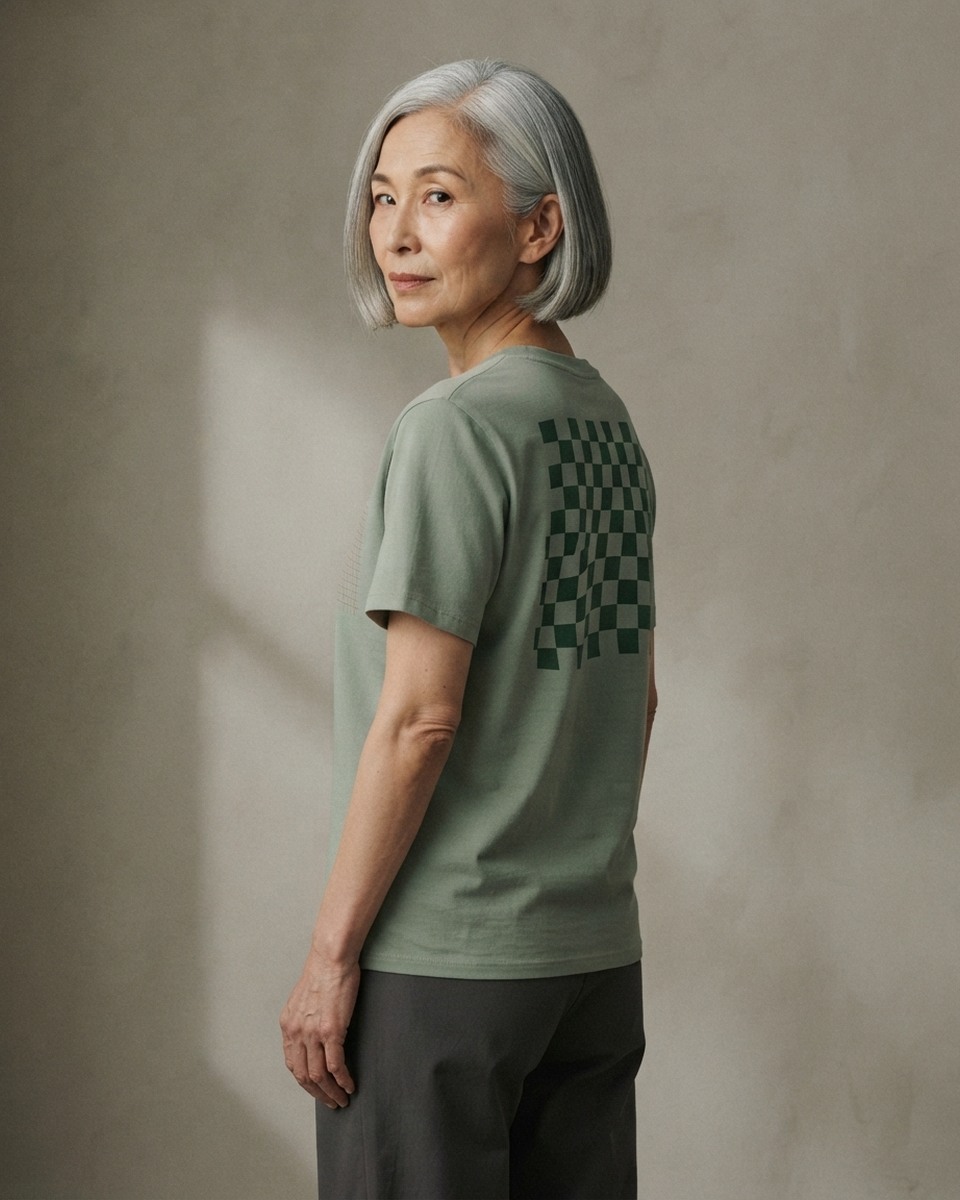 AI concept render
Most graded measurements grow together
Selected measurements grow by design
Can stay controlled in an oversized pattern
May drop far beyond the anatomical point
Can crop, stay stable, or extend independently
Width and length can be balanced separately
Two kinds of ease.
Wearing ease is the room you need to breathe, bend, sit, and get dressed. Design ease is the extra room that makes a silhouette. A fitted shirt has wearing ease even if it looks tight. An oversized shirt has more design ease, but that ease can go into width, depth, length, sleeve volume, or all four. The total circumference doesn’t tell you where the design decision lives.
A very wide chest with a narrow sleeve feels graphic and controlled. A long body on an ordinary shoulder just looks borrowed. The pattern has to decide which landmarks stay anchored so the looseness reads as intent rather than drift.
What grading actually does.
A size range is built by adding different amounts at different points. Chest, waist, hip, neck, shoulder, armhole, and length don’t all grow at one rate, because bodies don’t. Grading also preserves style lines, seam relationships, and production logic. Choosing a bigger size moves you through that system. Nobody redesigned the proportion around you.
So sizing up produces a package of changes. The shoulder drops, but the neck opens too. The body gets longer when you only wanted width. The armhole drops and starts lifting the whole shirt when you move. Sometimes that accident is great. Knowing the package tells you which levers you actually pulled.
Oversized is a set of proportions.
A boxy oversized tee pairs width with a fairly short body. A draped oversized shirt uses a dropped shoulder, a long curved hem, and light cloth. A heavy overshirt keeps enough armhole control to carry pockets and layers without turning into a rectangle.
Fabric decides whether the volume floats, hangs, or collapses. Dense jersey bridges across the torso. Fluid rayon drops straight down and makes the same pattern look narrow. Oversized is a relationship between pattern, material, and body.
The dropped shoulder rewrites the sleeve.
Move the shoulder seam down the arm and the sleeve no longer starts at the shoulder. Its cap gets shallower, its apparent length changes, and the seam makes a horizontal or diagonal break across the upper arm. If the body grows wide but the sleeve isn’t redrawn, the cuff lands past the hand.
Dropped shoulders also change how the garment lifts. The low junction pulls a broad area of the body when the arm rises, especially in firm cloth. That can be a fine part of a relaxed silhouette. Just look at it, rather than assuming more fabric always means more movement.
Measure the garment you love.
Size labels are local dialects. One brand’s medium overlaps another’s XL, and one brand can use different blocks in different lines. Lay a garment flat and record chest width, shoulder span, body length, sleeve length, biceps, cuff, and a few vertical positions. Compare with a garment that fits closer. The differences show where the oversized effect was built.
Flat measurements don’t fully describe fit in three dimensions, but they beat memory. Photograph the reference on a body, note the wearer’s measurements and usual size, and record the fabric. A 65-centimeter chest in rigid poplin doesn’t take up space the way the same width does in rayon jersey.
Grade the idea across sizes.
An oversized sample approved on one body is a starting point. Across sizes, shoulder width, sleeve reach, pocket position, neckline stability, and length each need their own attention. A pocket placed low on purpose in the base size becomes a nuisance if it’s graded mechanically. A dramatic sleeve swamps a small frame or loses its drama on a large one.
Every body won’t look identical in it, and shouldn’t. What should survive are the relationships: the shoulder falls past the body, the hem clears the hip by a chosen amount, the sleeve gathers at the wrist. Fit-test more than one size to see whether the idea carries.
Sizing up is still a legitimate move.
Sometimes the larger ready-made size gives exactly the slouch, length, or borrowed quality you want. Nothing wrong with that. The distinction just lets you predict the package: neck, shoulder, armhole, sleeve, body, and pocket positions all move together. Knowing that makes the improvisation smarter.
If one brand and one garment give you the result, record the size and its actual measurements. If you’re designing a new garment or a whole size range, translate the found effect into proportions instead of telling every customer to guess upward. Personal style can embrace accident. Product design has to reproduce it.
Design the negative space and test what fills it.
Oversized clothing is partly a design of air. Stiff fabric holds that air in planes. Fluid fabric lets it slide into folds and toward the lowest point. Layers fill it. A loaded pocket distorts it. Wind animates it. The same pattern can feel protective, formal, comic, or sensual depending on how material and proportion handle the space around the body.
Write an oversized brief as relationships: shoulder four centimeters past the body, chest wide enough for a sweater, hem above the fullest hip, sleeve full but cuff controlled, neck close enough to stay put. Then sample it in the real cloth and move. “Oversized” is the conclusion. The measurements are how you get there.
Fit adjectives need numbers.
Relaxed, loose, boxy, and oversized are fine places to start. Add where the volume goes, how long the body is, and one reference measurement. The garment stops getting generically bigger and starts becoming yours.