One garment, many organizing ideas
Start a dress with the force that shapes it.
A waist seam, a wrap, a yoke, bias grain, or internal structure can organize the whole design before any surface detail.
A dress hangs together when one construction idea explains how it meets the body and how it leaves it.
“Design a dress” sounds like a request for a drawing. A better place to start is a relationship: cloth hung from the shoulders, wrapped around the torso, cut close through seams, gathered into a waist, or held away by structure. That first force gives every later choice something to answer to.
A slip dress lets bias-cut cloth follow the body. A shirt dress organizes itself around a collar and placket. A smock releases volume from a yoke. A corset dress builds an internal frame. Same category, completely different engineering.
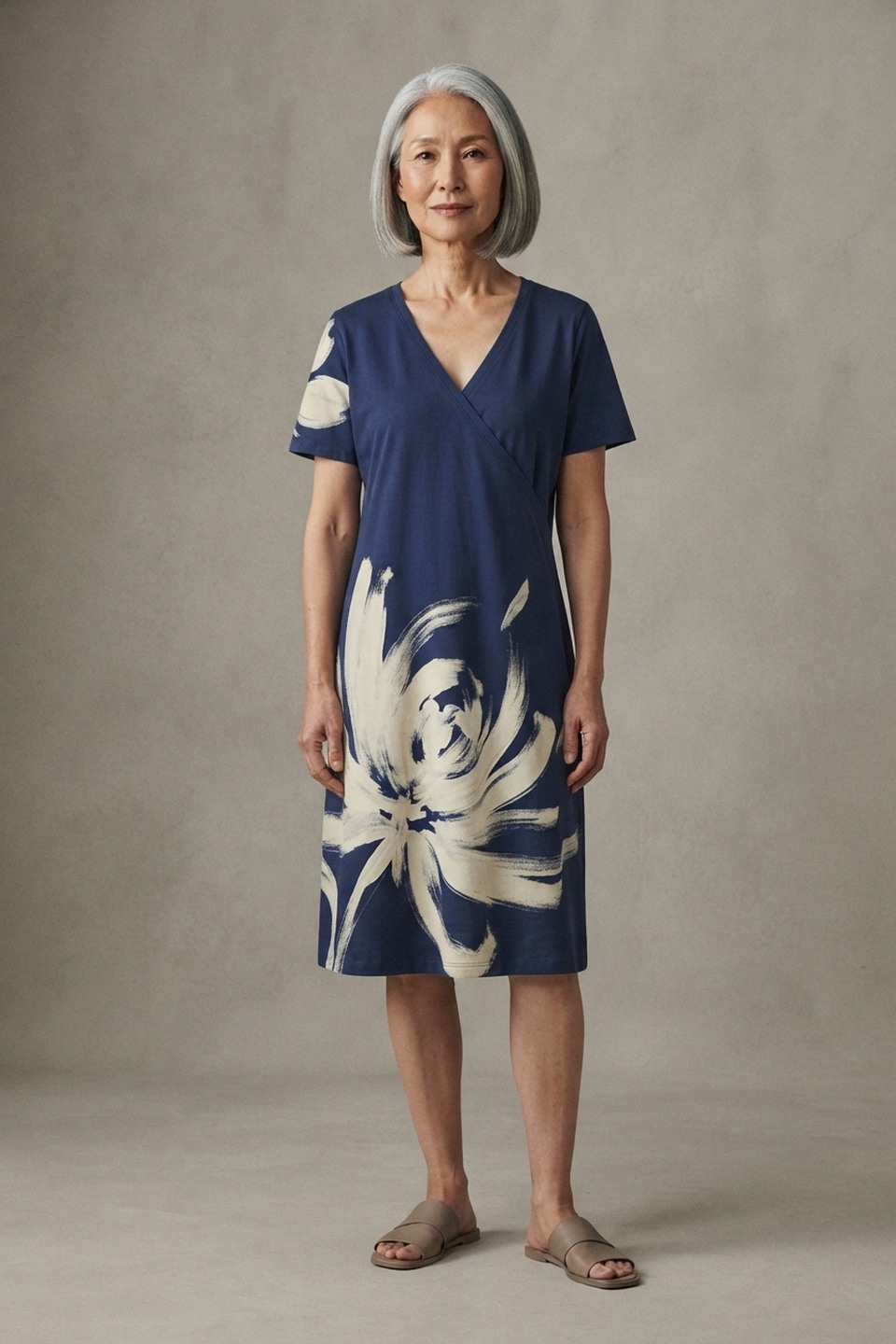 AI concept render
Hang cloth from straps or shoulders
Cross and fasten one side over another
Use seams, darts, stretch, or panels
Control added cloth at a seam or yoke
Use interfacing, boning, lining, or layers
Decide what holds the dress up.
A dress can hang from the shoulders or straps, wrap the torso, grip at the waist, flare from a yoke, or stand out from internal structure. That load path matters more than whether the sketch looks romantic or severe. It decides where the weight is carried and which seams are doing structural work.
Mark it on the first drawing. If the waist organizes the dress, decide whether that’s a seam, an elastic channel, a belt, or a shaped panel. If the shoulder carries a long skirt, think about strap width and neckline stability. Once the organizing idea is clear, the decorative choices have something to serve.
Support can be soft, rigid, or left out.
Darts and curved seams shape flat cloth around the torso. Elastic and stretch spread tension. Interfacing, boning, cups, and waist stays hold a more exact form. A loose shift skips most of that and lets cloth and body keep moving against each other. Each route feels different on the skin as well as looking different.
Support has to go somewhere that can carry it. A strapless bodice won’t stay up because the top edge was drawn horizontal. A heavy gathered skirt drags a soft knit waist down. The structure doesn’t need to look corseted, but the forces are there whether you show them or hide them.
The dress has to go on.
A fitted woven dress needs an opening wide enough for shoulders or hips. A zipper can hide in a side seam or run down center front. Buttons add adjustable interruptions. A wrap makes the closure part of the structure. Stretch removes the hardware but demands reliable recovery.
Test the sequence without help, unless help is part of the design. Can the wearer reach the zipper? Does the wrap stay put in a chair? Does a close neckline clear hair and makeup? Ignore this and a beautiful dress becomes a daily wrestling match.
The hem moves with every step.
Skirt volume can come from flare, gathers, pleats, godets, or layered panels. A circle skirt opens up when the wearer turns. Pleats keep their volume in controlled folds. A narrow skirt needs a slit, stretch, or enough stride room. Length changes what stairs, wind, and chairs can do to it.
Hem construction matters too. A deep turn-back adds body. A narrow rolled edge keeps it light. Horsehair braid exaggerates the perimeter. Bias areas drop farther than the straight grain and need time to settle before you level the hem.
Design the dress in motion.
Sit, reach, walk, take a step up, turn around. A narrow hem needs a vent, stretch, or enough circumference. A long full skirt swings, weighs something, and catches on things. Straps carry load. Necklines shift. Pockets fill. The body writes the real brief.
Choose cloth after naming the movement. Crisp fabric holds a shape out from the body; fluid fabric traces it and lets go. Lining changes opacity, friction, warmth, and support. The same sketch turns into a different dress when the material changes.
Pockets change the hip.
An in-seam pocket can disappear visually while its bag still adds bulk at the hip. A patch pocket becomes part of the composition. A pocket hung from a waist seam carries more safely than one sewn to fluid skirt cloth. The opening has to sit where a hand can get in without tugging a fitted bodice.
Put a phone in the sample, because an empty fitting hides the problem. If the skirt distorts, hang the bag from somewhere stronger, split the contents, or decide the clean line matters more. Just make the choice on purpose. A pocket nobody can use is worse than none.
The word “dress” carries culture as well as construction.
One-piece garments show up across ceremonies, religions, work, protest, and ordinary life, and their meanings don’t transfer. A silhouette, a textile, or a technique can belong to a specific community even when a search engine files it under a broad Western category. References deserve names, dates, and context instead of being flattened into “ethnic inspiration.”
Ask what a detail was for, who made and wore it, and whether it carries protected, sacred, or political meaning. Naming the source makes the reference real instead of costume shorthand.
Turn the idea into a testable dress brief.
Write down how the dress is worn, what holds it up, how it opens, how the skirt moves, what the cloth is, and what goes under it. Name what must stay put and what should move. A useful brief might read: shoulder-supported column, close through the upper chest, released below the high hip, invisible side opening, walking slit, fluid opaque cloth, no special bra required.
Prototype the governing relationship first. If the dress depends on bias, drape those panels in comparable cloth. If it depends on fit, resolve the foundation before adding a complicated skirt.
Say the dress in one sentence.
Cloth falls from a sculpted shoulder into an uninterrupted column. A fitted bodice releases into gathered volume at the waist. A wrapped front controls a fluid skirt. Write that sentence first. It tells the neckline, the seams, the opening, and the fabric what kind of dress they belong to.