An anatomy of the ordinary
A T-shirt is a bundle of decisions.
Fit, sleeves, neckline and knit structure explain why two plain T-shirts can feel so different. Change the drawing, then learn what to look for in the cloth.
Try the pattern
Four choices. One very different basic.
Compare silhouettes with this schematic drawing. It illustrates design choices; it does not simulate fabric or predict fit.
Boxy T-shirtCrew neck · Short sleeve · Heavyweight
Put two plain T-shirts on a table. One may be wider but shorter, with its shoulder seams farther apart and a smaller neck opening. Those differences explain more about how it will look on you than the word “medium” on either label.
Start with the relationship between width and length. A boxy tee is wide relative to its body length. An oversized tee has more room than a conventional close or regular fit, often with a dropped shoulder. Brands use these terms differently, so compare the actual shape with a shirt you already enjoy wearing.
The shoulder seam tells you where the body panel ends and the sleeve begins. Moving it down the upper arm changes the outline and the sleeve geometry. Movement also depends on armhole depth, sleeve width and the knit’s stretch. A wide body can still have a tight upper sleeve; a fitted body can give you plenty of reach.
Check the neckband next. It needs to pass over your head and return to its intended shape. A band cut too long can ripple; one cut too short can pull the body into gathers. The correct length depends on that particular rib and the neckline curve. A wider band also changes the visible opening, even if the body pattern stays the same.
Before changing the print, decide what should happen at those three places: the hem, the shoulder and the neck. They establish much of the tee’s character while it is still a blank.
Pull one thread
T-shirt
Short sleeve, crew neck, straight body.
Raglan
Move the shoulder seam diagonally to the neck.
Ringer
Add contrast binding at the neck and cuffs.
Tank
Remove the sleeves and redraw the armhole.
Henley
Open a short button placket below the neck.
Jersey, rib and weight describe different things
Most T-shirts use jersey, a knit made from intermeshing loops. Pull the fabric across its width and the loops change shape, allowing it to extend even without elastane. The face of single jersey shows columns of small V shapes; the back shows curved loops. CottonWorks’ guide to single and double knits explains these structures in more detail.
Rib alternates columns of knit and purl stitches. The folded structure can open sideways, which makes it useful for cuffs and neckbands as well as full garments. Stretch and recovery are separate: a fabric that pulls wider does not necessarily return cleanly after hours of wear.
GSM means grams per square meter, the mass of an area of fabric. It describes weight, while jersey and rib describe construction. A heavyweight fabric can be either. Dense jersey often gives a tee more body, but yarn, finishing and knit structure also affect how it bends. The drawing above uses thicker outlines as a visual shorthand for weight, not a physical prediction.
A useful fabric brief names an outcome: enough opacity to wear alone, a hem that stands away from the body, or a soft surface that still recovers. Handle and wash a sample before treating a GSM number as the answer.
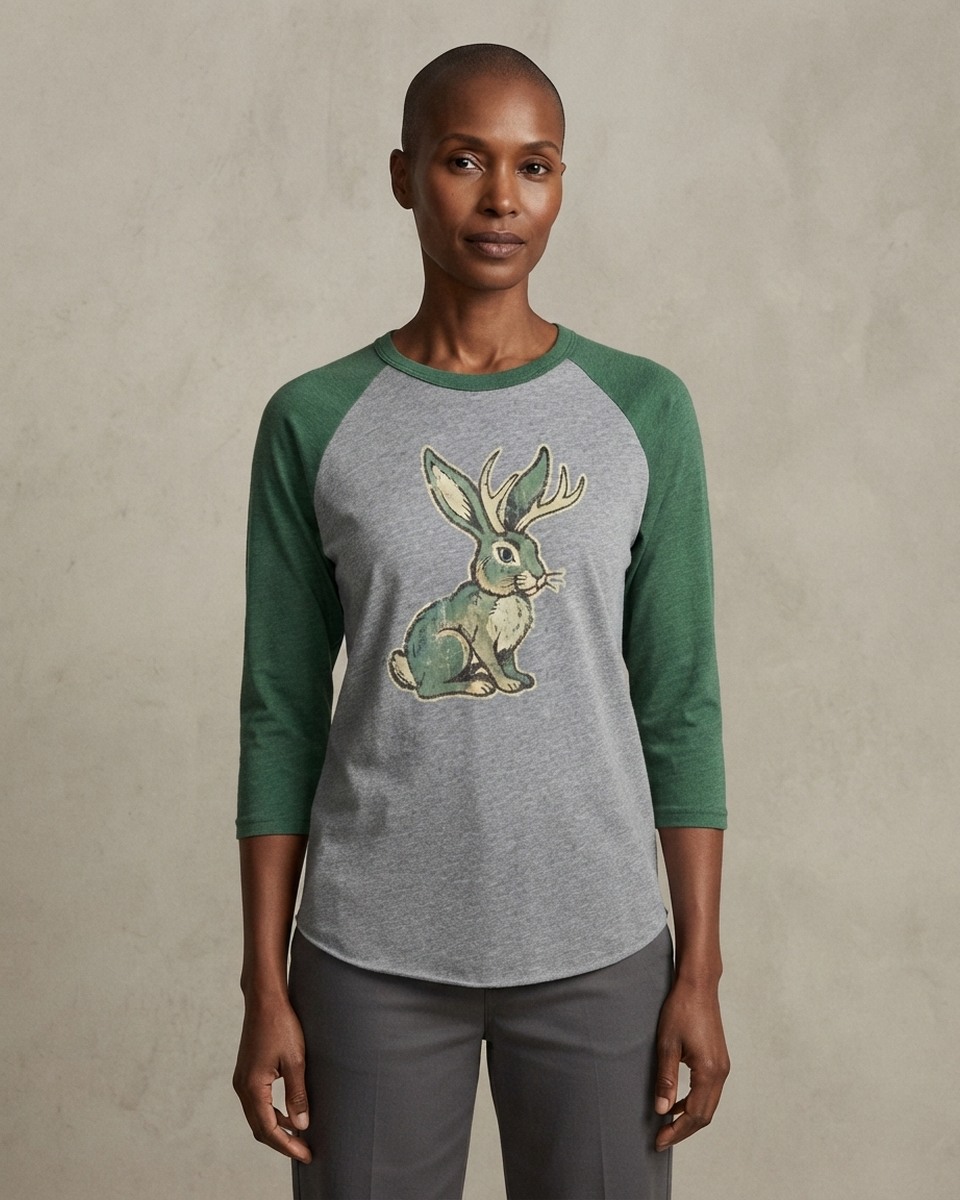
Construction speaks before graphics do
In a raglan tee, the sleeve seam travels diagonally toward the neck instead of meeting a separate shoulder seam. Contrast color makes that construction easy to see. A ringer tee takes another route: the body can stay conventional while contrast binding draws attention to the neck and sleeve openings.
Changing these lines changes where a graphic sits. A chest print sized for a narrow tee can look small on a wide one. Artwork crossing a seam introduces a different production problem from a small print centered on one panel. Decide the garment shape before approving the artwork’s scale and position.
Look inside the tee as well. A tubular body has no side seams; a body assembled from separate front and back panels does. Side seams allow those panels to be shaped independently. Either construction can work well. The important question is whether the finished shirt keeps the shape and alignment you chose.
If a side seam twists after washing, cutting alignment is one possible cause, but yarn and knitted-fabric spirality can also contribute. The symptom does not identify the manufacturing fault by itself. Washing a sample is more informative than judging the seam while the shirt is new and pressed flat.
Compare a tee you own, using the same landmarks
Lay a shirt you like flat without stretching it. Measure the chest from one side to the other just below the armholes, then note exactly where you measured. Record body length with a named starting point, such as the high shoulder beside the neck. These are garment measurements; they include the room around your body.
Compare shoulder width and sleeve length together. On a dropped shoulder, more of the distance to the cuff belongs to the body panel, so a shorter sleeve measurement can still put the cuff lower on your arm. For a raglan, use the maker’s measuring diagram; there is no conventional shoulder endpoint to reuse.
Finish the comparison on the body. Note where the hem meets your waistband, whether the sleeve opening touches your upper arm and what moves when you reach. “Keep this width but shorten the body” gives a designer a much better starting point than “make it a medium.”
Write the tee before adding the graphic
Try a brief like this: a wide, short tee with dropped shoulders, loose sleeves ending above the elbow, a close crew neck and opaque jersey that holds some space around the torso. It describes a recognizable garment without naming a size or promising that one fabric weight will achieve it.
Change the drawing until the proportions look right. Then compare them with a real tee and a physical fabric sample. The drawing helps you decide what you want; the garment tells you whether those decisions work together.